
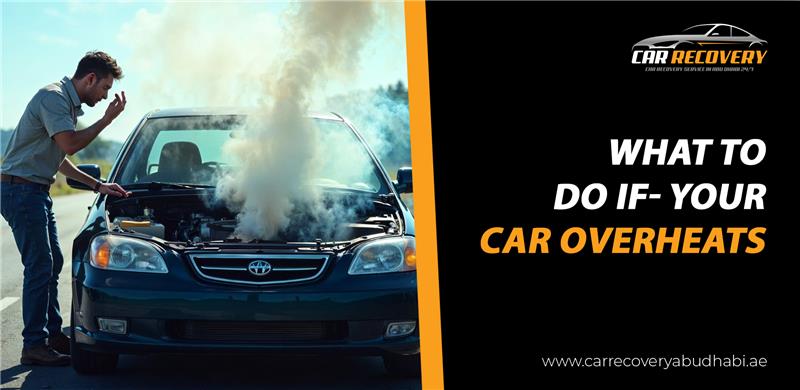
It is easy to miss the early signs of a car overheating. You might see the temperature gauge climb. A warning light could come on. Sometimes, steam starts rising from under the bonnet. Road temperatures in Abu Dhabi get extreme during summer. So, car issues like these become common. Despite being frequent, an overheating engine quickly turns a normal trip into a المساعدة على الطريق emergency.
Many drivers assume the problem is manageable and continue driving. But that decision often causes even more harm than the actual overheating. If you know what to do if your car overheats, you can keep the situation under control and stay safe. Plus, a small issue won’t turn into a major تعطل سيارتك.
Let’s start with:
Most cars show signs before serious damage can occur. You can act fast if you notice them. This stops the problem from getting worse. For instance, you may notice signs such as:
Some drivers only notice overheating when steam becomes visible. By that stage, the engine has often reached an unsafe temperature. So instead of letting things come to this point, it is better to respond to warnings before visible symptoms appear. Be it the warning lights or temperature changes.
When an engine overheats, the point is to reduce the engine temperature.
Because the air conditioning system surely has an additional load on the engine, switching it off will remove that extra strain on the engine. This may help reduce the temperature of the vehicle’s engine.
This tip may sound unexpected and uncomfortable. Turning the heater on in the hot weather? However, the surprising part is that it can help move heat away from the engine. The heater will use the heat generated by the cooling system. That can also be used to temporarily lower engine temperatures.
If you switch the heater to maximum, it draws some heat out of the engine. But it is a quick fix and not a solution. If the airflow remains cool even after turning the heater on, it may indicate low coolant levels. That is when the coolant is low or can’t circulate properly. Take it as a serious warning sign. So, don’t rely on the heater alone. Stop the vehicle as soon as it is safe to do so and find out the reason behind overheating.
Most drivers hope that the problem will disappear and continue driving. Don’t do that. Find a safe area and pull over as soon as possible. Try to stay away from moving traffic, and also switch on your hazard lights. In cases of severe overheating, do not continue driving the vehicle. It may cause serious engine damage.
Once you reach the safe place, quickly turn off the engine. Or else driving will keep generating heat. That will only worsen the problem.
Before opening your vehicle’s hood, it is crucial to let the engine cool down. Opening a hot hood immediately can cause pressurized coolant and hot steam to escape, leading to serious burns. Always wait until the vehicle has cooled before opening the hood for inspection.
Car overheating and watching steam rising is definitely a frustrating situation. However, still in this stressful scenario, don’t take actions that create big problems. Avoid these common mistakes:
Car Overheats? Stay Calm and Act Fast
Contact Car Recovery Abu Dhabi for Roadside Assistance 24/7
Now you know the dos and don’ts when the car overheats. Let’s understand why this overheating occurs. When the heat starts gathering more quickly than the cooling system can remove it, the temperature of the engine starts rising.
Coolant absorbs heat from the engine and transfers it to the radiator for dissipation. But if the levels drop, the engine cannot regulate the temperature effectively. Low coolant is one of the most common causes of engine overheating.
Many drivers ignore the small leaks. However, these small leaks gradually reduce coolant levels and lead to overheating. All leaks impact the cooling system’s performance, whether they are from the hoses, radiator, water pump, or coolant reservoir.
The thermostat controls coolant flow. If it becomes stuck, coolant cannot circulate through the engine and radiator. That results in a quick temperature rise.
When the water pump fails or cannot circulate coolant properly through the engine, heat builds up and causes the engine temperature to rise.
The cooling fan removes heat from the radiator. This is more useful when the vehicle is in traffic and moving slow. If the fan stops working or there is any sensor or electrical connection problem, engine temperatures can rise rapidly.
The engine releases heat through the radiator. If it becomes clogged, restricted airflow or disturbed coolant movement prevents the radiator from dissipating heat as expected, causing the engine to run hot.
Oil reduces the friction between moving engine parts. However, if the oil levels drop from a certain point, the friction increases. This increased friction in the engine parts generates additional heat.
Most drivers want to get back on the road as quickly as possible to resume their trip and work. Plus, waiting for the car to cool down is not easy. You might have important things to do. However, don’t rush back onto the road. First identify and address the problem before attempting to drive again.
So, whether it’s safe to drive or not depends on the current situation of your car.
First, the engine should cool down. Check that your coolant level looks normal.
Also, look for any visible leaks. If you see no car issues, you can drive a short distance.
Watch the temperature gauge closely. Stop right away if:
Overheating can cause damage that is not visible quickly after overheating. For instance, potential consequences include:
Vehicle cooling systems work harder when outside temperatures rise. In Abu Dhabi, several factors increase the risk of overheating from high ambient temperatures to heavy traffic congestion and increased use of AC.
In summer, engine parts have to work extra, be it the radiator, cooling fan, or the coolant system. Moreover, even if a cooling system works fine in normal weather, it may not perform the same in peak summer conditions. Therefore, regularly inspect your cooling system before and during the extremely hot temperatures.
Many overheating situations do not require immediate towing or other recovery help. Others absolutely do. For instance, you should call vehicle خدمات استعادة السيارات عند التعطل if:
In short, when your car overheats extremely, call for roadside help. This step can stop worse damage to your engine. استعادة السيارات في أبوظبي has a team ready to assist. Our team assists with vehicle breakdowns, jump starts, السحب, car unlocking, and vehicle recovery services across Abu Dhabi. We also quickly deal with cars that overheat.
A car can overheat for many reasons. Scorching hot weather further increases the severity of the car problems. If your car overheats, stop driving as soon as it is safe to do so. Knowing what to do during a car overheat situation can help protect your engine and prevent costly repairs. Switch off the AC. Stop the car in a safe spot and shut down the engine. Wait till the car cools down. Don’t open the radiator cap while the vehicle engine is still hot. Never ignore the car’s temperature warnings. If you are stranded on the road, contact a professional roadside assistance service, such as استعادة السيارات في أبوظبي.
Our experts respond quickly to breakdowns and help move your vehicle to a safe location or repair facility, reducing the risk of issues. Taking prompt action when your car overheats can prevent minor cooling system issues from turning into major engine damage.
WhatsApp us