
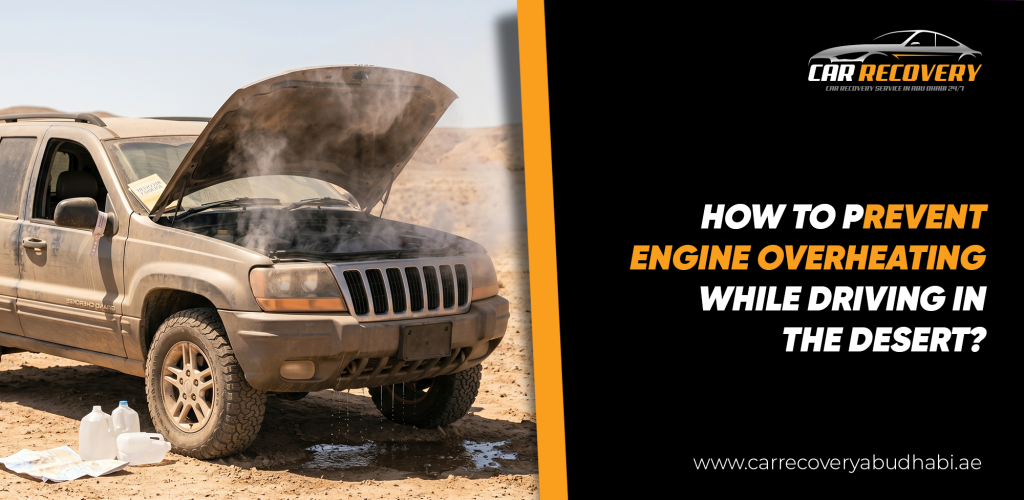
The desert is completely a different world. The soft sand, narrow tracks, and sometimes no roads at all are very different from a normal driving scenario. Still, Abu Dhabi desert driving and adventure are exciting. Many people head into the desert for travel or work. However, this comes with desert risks, such as car breakdowns and getting stuck. Engine overheating is one of the most prevalent problems among them. The sweltering heat, fine sand and long drives can put stress on your car within a very short time.
Proper preparations not only safeguard your engine but also minimize the possibility of requiring an urgent Desert Recovery Abu Dhabi rescue on your way. Here are a few tips that you can adopt in order to avoid engine overheating and maintain your drive safely when in desert conditions.
The extreme weather conditions and heat strain the engine further, which can lead to overheating. The following are the most frequent reasons that desert travelers should be aware of.
Start with a complete vehicle inspection before you enter the desert. A quick check can save you from various serious problems later.
Engine oil: Confirm the engine oil is at the proper level as recommended. Plus, make sure the oil is clean, as old or low oil levels cannot guarantee proper engine protection.
Coolant level: Next, check the engine coolant level. This liquid controls engine temperature by absorbing the heat. When levels drop, its ability to manage heat weakens, increasing the chances of overheating.
Radiator: Scan the radiator for any leaks, blockages, or dust particles. Clean it to ensure proper engine cooling.
Battery: Next, check the battery; a must-have in a vehicle inspection checklist. Desert temperatures also affect battery performance. So, it should be in good condition to cope with the harsh desert climate.
Air Filter: Desert air has fine dust that can easily clog the filter. A clean air filter ensures sufficient airflow to the engine and fuel efficiency.
Remember, unlike city driving, there is extra strain on the car, and getting service is not as easy. So, you must check your car right before hopping on a desert drive.
Coolant prevents the engine from heating up. The coolant continuously absorbs the heat from the engine. So, the temperature stays in control.
Therefore, before going on any drive, maintain the coolant level. If the coolant level is low, you can refill it with a pre-mixed coolant or a 50/50 mix of antifreeze and water. Old coolant fluid cannot regulate the heat properly. You can also replace it before it loses its cooling efficiency.
Many drivers ignore the temperature gauge. One of the signs that a car usually gives beforehand is the temperature on your dashboard. When the high zone is hit with the temperature needle, the engine is already overheating. It should not be ignored. Slow down to take a load off the engine and pull over when it is safe. It is much better to take a short break to allow the engine to cool than to drive on and run the risk of causing major damage.
Not all drivers are experienced in desert driving. Skilled drivers understand that one’s driving style has a direct effect on the engine.
Avoid sudden acceleration as it strains the engine and also increases its temperature. Instead, maintain a steady speed to reduce the stress on the engine and improve cooling.
In addition, short breaks during long drives allow gradual yet sufficient engine cooling and reduce the overheating risk. Also, while driving in the desert, avoid overloading vehicles. Extra weight only makes the engine work more, especially on soft sand.
Smart driving habits like the ones above and more help the driver handle the vehicle better and reduce the chances of engine overheating.
On normal roads, correct tyre pressure keeps the car stable and efficient. The desert works differently. Hard, fully inflated tires sit on top of soft sand rather than moving through it, the wheels spin, the car struggles, and the engine works harder to compensate. That extra effort generates heat.
By slightly deflating your car tyres, you increase the contact patch, which gives it something to cling to. The vehicle moves more smoothly, and the engine is much cooler. The average desert driver decreases to about 15 to 20 PSI under different circumstances. Also, maintain an even amount of pressure in all four tyres, and keep a compressor to reinflate before getting back to paved roads.
When temperatures rise, car air conditioning becomes essential rather than just comfort, especially in desert heat. However, using the AC without control adds extra load to the engine.
To prevent overheating, it is better to use AC sensibly rather than keep it at maximum all the time. Adjust the AC based on comfort and driving conditions. If you see engine temperature increasing, minimize the AC use for some time to lower the load and hence engine overheating.
The above are all the precautions you can practice avoiding getting the engine too hot. However, even after all this, if the engine overheats, do not keep driving. Stop your car in a safe place, or else this may cause serious damage. Also, turn off the engine to let it cool down. Some drivers remove the radiator cap immediately. Don’t do it, it can be very hot and dangerous. After waiting for some time, check if the temperature has decreased from before. You can also check coolant levels to be safe.
No driver would want to get stuck in the desert. However, handling a desert breakdown is not easy. It can lead to delays and pose potential safety hazards. Therefore, when the issue is severe and a driver can’t handle it on their own, calling for help is best.
If, after checking, you don’t know what the problem is and how to handle it, let an expert take care of it. Professional help from experts, such as Car Recovery Abu Dhabi services, not only saves time but also keeps you safe in such situations.
Car Recovery Abu Dhabi’s expert team will recover your car from the desert and deliver it to a location of your choice. It can be your preferred workshop, home or wherever you want. With the specialized desert recovery Abu Dhabi, the experts will take care of your vehicle.
Engine overheating is a common issue. But it can be avoided with proper prevention. Avoiding overheating is better than dealing with the problem. Repairs after overheating can also be expensive. It costs even more if the engine gets damaged.
Check and maintain your vehicle fluids and watch the temperature gauge. Further, careful driving in desert also reduces the risk. Besides these, never overlook any warning signs. And if drivers ever find themselves in a difficult situation, professional Car Recovery Abu Dhabi services can help them handle the desert journey troubles.
Stranded in the Desert? Car Recovery Abu Dhabi Has You Covered
Well-prepared drivers get into trouble as well. When your car malfunctions or overheats and you are unable to control it, or you get stuck in soft sand, Car Recovery Abu Dhabi is the best choice to offer swift, dependable desert retrieval services in Abu Dhabi 24/7. The team takes care of engine related breakdowns to complete vehicle removal with special equipment that is designed to meet the conditions of sand. our car is delivered to your preferred location, be it at home, workshop or at an entirely different place.
WhatsApp us